
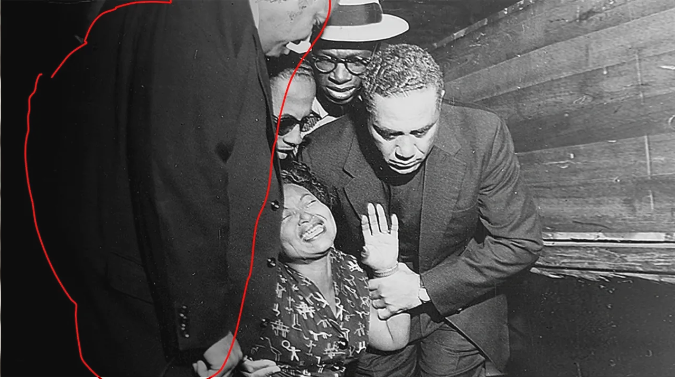
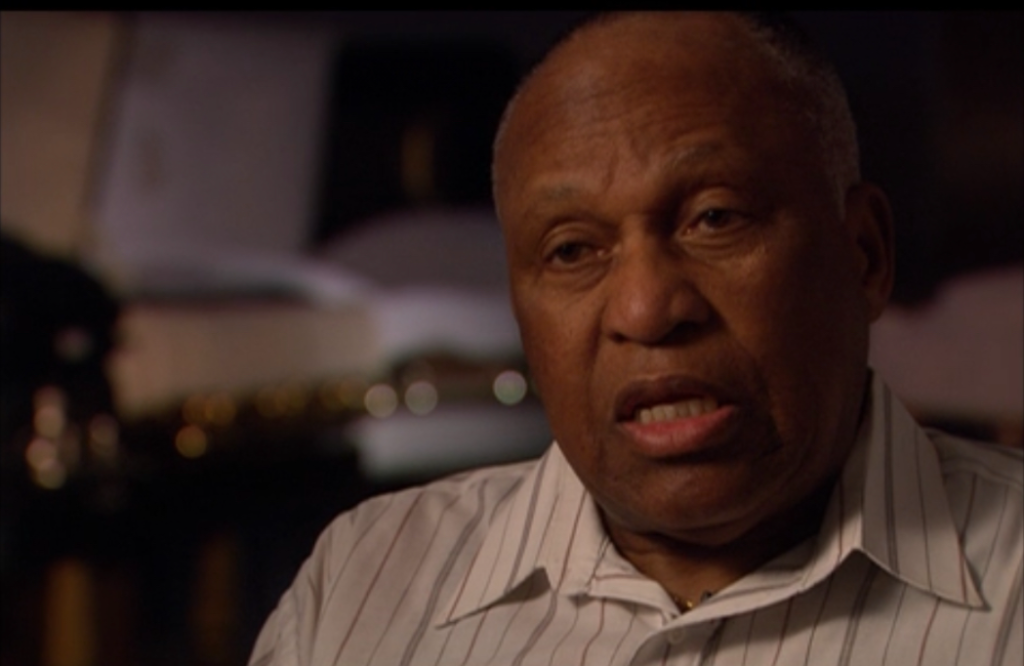
The impact that Emmett Till’s case had on the whole world was indescribable. The courage his mother had and the bold statement she made by leaving his casket open during his funeral was like no other. Over 100,000 people gathered on September 2, 1955 to see what had happened to Emmett Till. Many black communities had been witnessing the cruelty for years but when it was made public it made a statement that change had long been overdue and that racism against blacks was the death of your youth at the hands of adult white men and women.
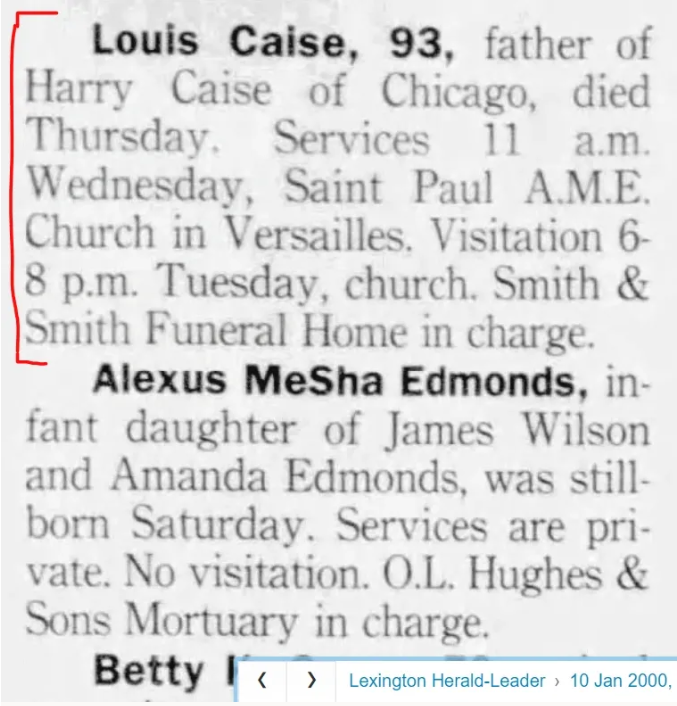
At age 7, Harry was living with his parents in the heart of Southern Woodford County on Cummins Ferry Road in Clover Bottom, Ky.
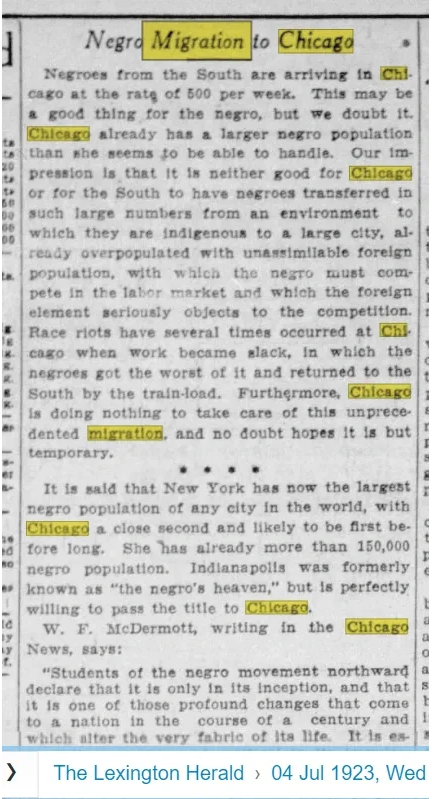
Like his great aunts migrated West with the land rush during the late 1880s, Harry was impressed by stories of the opportunities and migrated to Chicago during “the great migration”. The great migration was between 1910 and 1940. Many blacks migrated from the South to the Northern bigger cities, one being Chicago because it was known as the “promise land” that turned out to be not so promising for African Americans due to inadequate housing and resources causing for overcrowding. However with there being fifty-five grandchildren of America Caise after her death in 1940, it was very common to see that a lot of them split up and moved to other parts of the country in search of a better life then that of the countryside in Southern Woodford County. Harry moved to Chicago sometime during the late 1940s, it’s believed that he was educated there in Mortuary sciences while boarding with family members. It was very important to our family for everyone to get a higher education. Harry’s mother and father could read and write and were only able to complete the 8th grade. In 1955, Harry worked as a mortician for the A.A. Rayner & Sons Modern Funeral Service which was located on the corner of 41st Street and Cottage Grove.
The black community in Cook County, Chicago were a resemblance of what black communities were like in the South. Much like the description that Mamie Till gave in her autobiography when she chose to move to Chicago with family that migrated from the deep South before giving birth to Emmett. Everyone knew whose family you belonged to and persons that migrated from the same area lived close by one another.
Harry Caise married Prudence Edna Hutsell, on May 26, 1954. They met in Cook County where they lived and raised their family. ‘Pru’ as our family would call her, was a native of Kentucky. They had two daughters Debra Caise-Fitzpatrick and Twila Caise-Ferguson. Twila was the niece of Pru that they adopted.
Harry was a distinguished looking man that enjoyed to talk, he always dressed very nice and would come to Woodford county with his family to visit on special occasions. He didn’t ever speak much about the death of Emmett Till or his reaction to Mamie Till’s heartfelt response to the body because that just wasn’t something our family did. Our family weren‘t strangers to violence inflicted on blacks by whites either, it just wasn’t a topic discussed because it was sad. Harry’s Uncle John Creth, my great-great-great uncle, the husband of Mary Emma Caise (Lewis Caise’s sister), was killed by white men in Clover Bottom, Ky. My grandmother Katherine Bush states “that it was said he was killed to be shown up, to be taught a lesson. The lesson being that blacks were inferior to whites“.
It was later posted in the Lexington Herald Leader news paper that he had drowned at Brack Howards branch which was false. Mary was the eldest sister of Lewis Caise, she was living with John and their children on their own farm at the time of this tragedy.

Hi, this is a comment.
To get started with moderating, editing, and deleting comments, please visit the Comments screen in the dashboard.
Commenter avatars come from Gravatar.
Thank you!